
Low House Edge Slots
Low house edge slots return more to the player by design — typically 98% RTP or higher. SpinHunter’s 2026 guide ranks the best UKGC-certified titles, explains the maths, and covers play under the April 2026 rule set.
Low House Edge Slots Games




Featured Casinos

Velobet
50 Free Spins + £10 Bonus


 Accepted payments

Zizobet
50 Free Spins No Deposit
Accepted payments

Cosmobet
50 Free Spins No Deposit
Accepted payments

Rolletto
50 Free Spins No Deposit
Accepted payments







* 18+ only. New customers only. T&Cs apply. Gamble responsibly. BeGambleAware.org
Low House Edge Slots Overview
The category is defined by a numerical threshold rather than a feature set. SpinHunter draws the line at a 2.00% house edge — equivalent to 98.00% RTP — for inclusion in the broad category, and flags titles at 1.00% house edge or lower as the strict subset that matters most for serious bankroll management. Below 2% the operator’s mathematical share of each wager sits at half the industry standard rate of around 4%; below 1% it drops to a quarter. Across the wider UK market, 1% house edge titles number in single digits, and 2% titles total roughly 25 to 30 verifiable releases at time of writing.
A second criterion qualifies inclusion. The published RTP must be the figure that applies during ordinary play, not a theoretical maximum reached only under specific staking conditions, unless those conditions are clearly disclosed and accessible to UK players. Several classic low house edge slots advertise headline RTPs of 99% or higher that only apply at maximum coin bet on a supermeter feature; SpinHunter includes these but states the staking requirement explicitly in each entry. The April 2026 UKGC rule set requires this disclosure on the operator’s game-info panel for any title with a variable RTP structure.
Best Low House Edge Slot Games in 2026
The titles below all carry published house edge figures of 2.00% or lower at UKGC-licensed operators in 2026, with provider sources or operator help-panel disclosures verified for each entry. Selection prioritised lifetime certification status, transparency of RTP figures, and continuous availability across at least three top-twenty UK casinos. Four of the five entries hit the strict 1.00% threshold, with the fifth sitting just above to demonstrate the category boundary.
Mega Joker
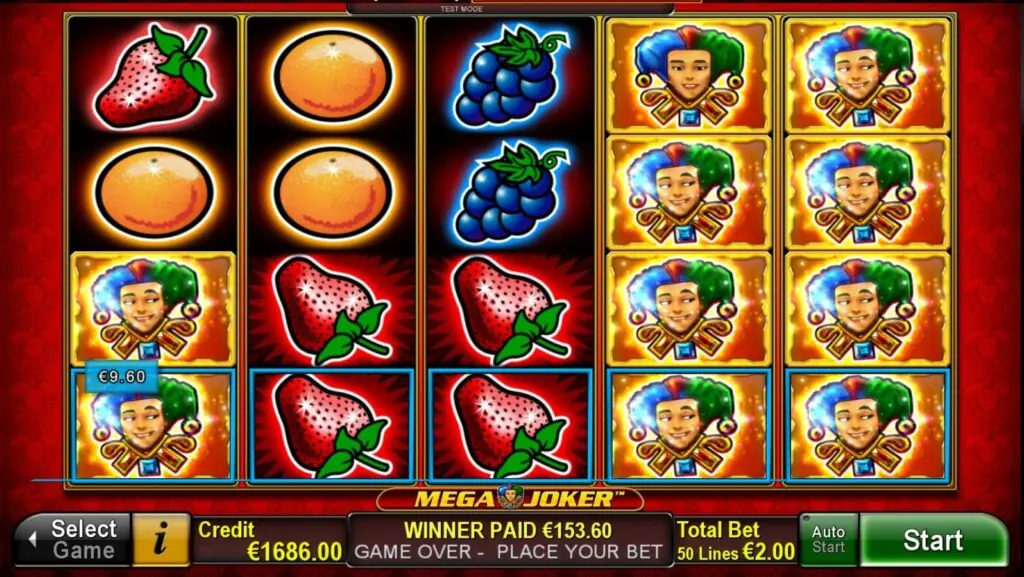
Mega Joker was released by NetEnt in 1999 [VERIFY exact year] and has held its place as the benchmark low house edge slot in the UK market for over two decades. The published RTP reaches 99.00% in supermeter mode at maximum coin bet , dropping sharply in base-game low-stake play — the staking condition matters more here than in any other title on this list. The slot uses a five-reel, three-row, five-payline classic-fruits frame with no bonus round in the conventional sense; instead, base-game wins can be banked into a supermeter ladder that pays the high-RTP figure on its own internal spins. Max win sits in the lower bracket at around 2,000 coins [VERIFY]. It suits players who understand the supermeter mechanic and stake to access it; played casually, the published figure is irrelevant.
Jackpot 6000
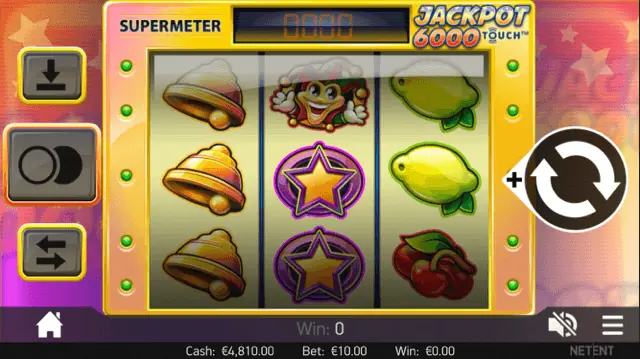
Jackpot 6000 is NetEnt’s other supermeter classic, released as a digital adaptation of a Norwegian land-based machine [VERIFY release year]. The headline RTP of 98.86% applies only at maximum coin bet with the supermeter feature active ; below that staking condition the return drops sharply. The slot runs a three-reel, five-payline frame in classic fruit-machine style, with a Joker symbol that triggers the supermeter ladder where the published high RTP lives. Max coin bonus tops out at 6,000 coins, hence the name. The mechanic is unforgiving for casual play — supermeter wins build slowly and require correct staking discipline to access the published return — but for players willing to learn the rules, it sits at 1.14% house edge, comfortably inside the strict subset. Prefer it over modern Megaways frames if long-run edge matters more than visual feature density.
Ugga Bugga
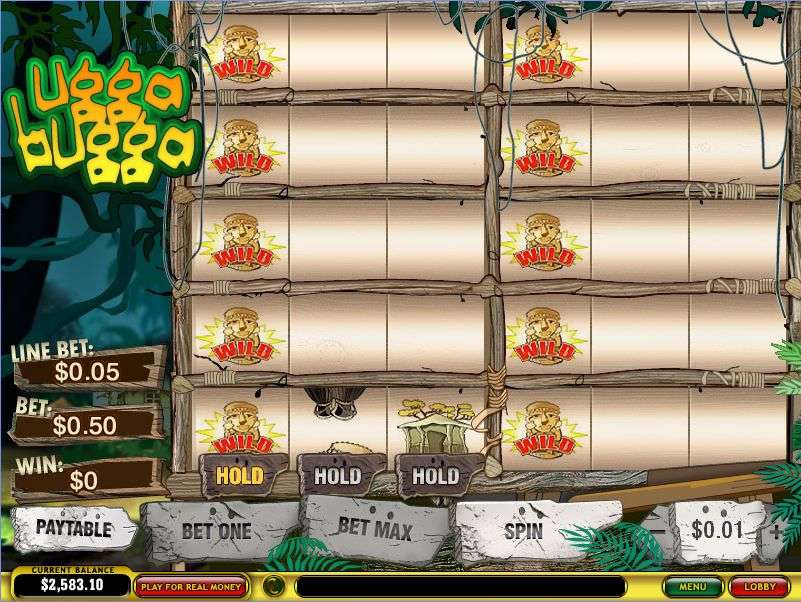
Ugga Bugga was released by Playtech around 2007 [VERIFY release year] and remains one of the highest published RTP slots in the UK market at 99.07% [VERIFY exact figure], placing it inside the strict 1% house edge subset. The slot uses an unusual hold-and-spin mechanic across ten separate reel sets — the player spins one reel, holds the symbols of choice, then spins the remaining nine reels using those held positions, which produces a wider spread of paylines per spin than a standard single-grid design. There is no traditional free-spins round; the maths concentrates the published return inside the hold mechanic itself. Max win sits in the lower bracket [VERIFY x-stake cap] and volatility is rated low to medium. The tribal theme has aged poorly and the artwork is dated, but the maths still hold up; the slot suits players who care about the figure and not the wrapper.
Book of 99
Book of 99 was released by Relax Gaming in 2021 with a published RTP of exactly 99.00%, putting it at the strict 1% house edge threshold without requiring any supermeter or hold mechanic to access the figure. The slot uses a five-reel, ten-payline frame [VERIFY paylines] with a Greek mythology theme built around the Orpheus legend; the bonus round is a free-spins feature with an expanding-symbol mechanic that can cover full reels for high-multiplier wins. Max win sits at 10,000x stake, which is competitive against any modern slot, low edge or otherwise. Volatility is rated high — the trade-off for the published 99% figure is concentrated payouts and longer dry runs in base play. It suits patient players who want a modern visual presentation without compromising the maths; SpinHunter’s highest RTP slots breakdown tracks Book of 99 as a category leader.
1429 Uncharted Seas
1429 Uncharted Seas was released by Thunderkick in 2015 with a published RTP of 98.60% [VERIFY exact figure], which puts it just above the strict 1% house edge cut and inside the broader 2% category. The slot uses a five-reel, twenty-five-payline frame [VERIFY paylines] with hand-drawn nautical artwork built around medieval cartography; the bonus round is a free-spins feature triggered by a wild symbol stretching across the central reel. Max win sits at around 700x stake [VERIFY], which is substantially below modern category leaders and reflects the slot’s volatility profile rather than its edge — low volatility caps the upside in exchange for hit-frequency. The artwork has aged well and the slot still appears in the regular grids of major UK casinos in 2026. It suits low-stake casual sessions; the 1.40% house edge is genuine, and base-game hits land often enough that bankroll erodes slowly.
How Low House Edge Slots Work
The maths behind these titles tracks back to one number: the long-run mean return of a certified random number generator across an infinite spin sample. RTP is calculated by the studio’s mathematicians during design, then independently verified by a UKGC-approved test house — typically eCOGRA, GLI, or BMM — through statistical analysis of the certified RNG output across millions of simulated spins. The published figure represents the asymptotic mean: across enough spins, the actual return approaches the published RTP within a vanishing margin. House edge is simply 100% minus RTP, expressed from the operator’s perspective rather than the player’s.
The reason most slots cannot deliver low edge figures is structural. Bonus rounds, jackpot pools, and high-volatility max-win caps all consume RTP budget. A slot with a 50,000x max win and a heavy free-spins feature has to subtract from base-game hit frequency to fund those rare large outcomes, and the net mean return rarely climbs above 96.50%. Low house edge slots achieve their figures by reversing that trade — flatter maths, smaller max wins, simpler features, and in some cases archaic supermeter mechanics that concentrate the published return inside a specific staking condition.
For 2026, SpinHunter re-runs the category check quarterly. Provider sites, operator help panels, and BigWinBoard’s RTP database are cross-checked for each entry; any title where the figure has drifted, or where the operator has switched to a lower-RTP variant of an otherwise eligible slot, is flagged for review and either reconfirmed or replaced.
Key Characteristics of Low House Edge Slots
The defining structural traits of low house edge slots cluster around a few maths and design choices that operators rarely advertise but that are easy to spot once known. Hit frequency typically runs higher than the industry average — the 1429 Uncharted Seas figure of around 33% per spin is representative of the low-volatility end, while supermeter slots like Mega Joker land base-game hits around 18% to 22% with the bulk of the published return concentrated inside the supermeter ladder. Max wins are uniformly smaller than modern Megaways or feature-heavy releases; most entries cap between 700x and 10,000x stake, which is a fraction of the 50,000x ceiling that has become the industry default. Stake ranges run wide, from £0.10 minimum to between £100 and £125 maximum, with the £5 cap during any active bonus play under the April 2026 UKGC rule.
Device compatibility holds across the category but with a generational quirk. Modern entries like Book of 99 ship with full HTML5 portrait and landscape mobile builds, complete keyboard navigation, and screen-reader compliance. Older classics like Mega Joker and Ugga Bugga were built to earlier standards and have been retrofitted by their studios for mobile play; SpinHunter’s UK mobile slots breakdown covers the touch-control quality on each. Session implications follow predictably from the maths. A 30-minute session at £1 stake on a 99% RTP slot exposes around £18 to long-run expected loss across 600 spins; the same session on a 96% RTP slot exposes £72. The four-times factor is the entire reason this category exists.
Common Misconceptions About Low House Edge Slots
The most damaging misconception is that the published RTP applies session-by-session in any meaningful way. It does not. RTP is the long-run mean across millions of spins, and a 600-spin session represents a vanishingly small sample of the certified output. A 99% RTP slot can return zero across a session, or return 300% — the published figure tells a player nothing about what the next 600 spins will produce. What it does tell them is the long-run cost of playing that title relative to a 96% slot, which is the only legitimate use of the figure for choosing between titles.
A second misconception runs that the supermeter or hold mechanics on classic low house edge slots are deliberately confusing because operators want to suppress the high-RTP figure. The mechanic is genuinely older — Mega Joker and Jackpot 6000 are digital ports of mechanical Norwegian fruit machines from the 1990s — and the supermeter ladder is part of the original design rather than an obfuscation layer. The 99% figure on Mega Joker is real, accessible, and certified, but only at maximum coin bet with the supermeter active; that condition is disclosed in the slot’s own paytable and on every UKGC operator’s game-info panel for the title.
The third misconception is that high-RTP slots must be loose by design. Looseness is not a defined slot property; it is a perception built from session variance. A 99% RTP slot with high volatility can produce longer dry runs than a 95% RTP slot with low volatility, because the published return on the high-RTP slot is concentrated into rarer, larger payouts. Book of 99 is the clearest example — 99% published RTP paired with high volatility means most sessions return below the mean, while a small minority deliver the headline outcomes.
How to Choose the Right Low House Edge Slots for You
For the low-budget casual player working with a £20 to £50 weekly slots budget, this category is the most rational place to focus. A £20 deposit at £0.20 stake on a 99% RTP slot has an expected long-run loss of £2 across 100 spins; the same deposit at the same stake on a 96% RTP slot has an expected long-run loss of £8. Within the category, low-volatility entries like 1429 Uncharted Seas stretch the bankroll further than supermeter classics, because base-game hit frequency is higher and stakes can sit at the £0.20 to £0.40 floor without losing access to the published return. SpinHunter’s low volatility slots guide covers the relationship in detail.
The mid-stakes regular with a £100 to £300 weekly budget gains the most absolute value from low house edge slots, because the long-run loss differential scales linearly with stake. A £200 weekly bankroll across a 99% RTP slot at £1 stake carries an expected long-run loss of £6 across 300 spins; the same bankroll at £1 stake on a 96% RTP slot carries an expected long-run loss of £24. The choice between supermeter classics and modern entries comes down to feature preference at this band — Book of 99 for high-volatility headline hits, the supermeter classics for slower, more methodical accumulation.
The high-roller bankroll player at £500 or more weekly faces a different decision. The maths still favours low edge titles in absolute terms, but max-win caps in the 700x to 10,000x range constrain upside compared to Megaways and progressive titles where 50,000x or jackpot pools are accessible. The pragmatic split is bankroll allocation — a portion at low edge for survival, a portion at higher-volatility titles for upside — with the proportion governed by appetite for variance.
Tips and Strategy for Playing Low House Edge Slots
Bankroll maths is more important here than at any other category, because the entire reason to play low house edge slots is to extract the small statistical advantage they offer over the wide market. The 1% rule still applies — base stake at no more than 1% of session bankroll — and on supermeter classics the rule has a second layer. The published 99% figure on Mega Joker and Jackpot 6000 only applies at maximum coin bet, which means a player who wants the long-run edge must size session bankroll to accommodate the maximum coin bet, not the minimum. Playing those slots at low coin bets without supermeter activation pulls the effective RTP down to the base-game figure, which is far lower.
Demo play removes the cost of pattern-learning and is particularly useful for the supermeter classics, where the staking and feature interactions are not intuitive. SpinHunter’s free demo slots guide explains how to access demo modes legally under UKGC rules; for this category, a 200-spin demo session is the right minimum to read hit-rhythm before committing real-money stake. Session limits should be set on the operator dashboard before the first spin — deposit limit, loss limit, and time limit are the three controls that matter most.
There are no systems that beat the published RTP, even on a 99% slot. The 1% house edge is small, but it remains an edge against the player across the long run. No staking pattern, no Martingale, no doubling progression alters the certified maths.
Leading Providers for Low House Edge Slots in 2026
NetEnt holds the strongest historical position in the category through its supermeter classics — Mega Joker and Jackpot 6000 are the two titles UK players reach for when published RTP is the deciding factor, and both remain certified and live across major UKGC operators in 2026. Relax Gaming has emerged as the modern leader through Book of 99 and a small follow-up catalogue of 99% RTP releases, and the studio’s commitment to transparent RTP disclosure on its public site makes verification straightforward. Playtech’s contribution sits in older releases like Ugga Bugga, where the unusual hold mechanic produces one of the highest published returns in the UK market.
Thunderkick’s 1429 Uncharted Seas remains the studio’s strongest entry in the broader 2% subset, and the artwork-led design ethos has held up well over a decade. Beyond these four, the category thins quickly — Microgaming, Pragmatic Play, and Big Time Gaming all have isolated high-RTP entries but none have built the deeper catalogue depth that NetEnt and Relax Gaming offer. For 2026, the practical shortlist of providers serving low house edge slots is the four studios above; players who want the strict 1% subset will find it concentrated in NetEnt’s supermeter classics, Playtech’s Ugga Bugga, and Relax Gaming’s Book of 99.
Low House Edge Slots vs Related Slot Types
Where low house edge slots sit relative to other UK RTP-focused categories matters when sizing a session bankroll. The two adjacent categories are high RTP slots — a broader band typically defined as 96.50% RTP and above — and low volatility slots, which often overlap with the low edge category but are defined by hit-frequency rather than published return. The table below covers RTP range, max win range, hit frequency band, and typical session profile for all three.
| Category | RTP Range | Max Win Range | Hit Frequency | Session Profile |
|---|---|---|---|---|
| Low House Edge Slots | 98.00%–99.07% | 700x–10,000x | 22%–33% | Long, methodical |
| High RTP Slots | 96.50%–97.99% | 5,000x–50,000x | 24%–28% | Standard mid-length |
| Low Volatility Slots | 96.00%–98.60% | 500x–5,000x | 30%–40% | Long, low-variance |
The numbers show why the low edge group is a tighter category than either adjacent type. Max wins concentrate in a smaller upper band — 10,000x being the practical ceiling outside outliers — which is the trade-off for the published return. Hit frequency overlaps with low volatility but does not match it at the top end, because some low edge slots like Book of 99 carry high volatility despite their RTP. SpinHunter’s popular slots tracker shows that the broader market still favours wide-distribution titles with bigger max wins, even where the published edge is materially worse for the player.
Where to Play Low House Edge Slots at UK Casinos
Verifying where to play before depositing follows the same checks as any UKGC slot category, but with one extra step that matters for this group. The first step is confirming the operator’s UKGC licence number on the gambling commission’s public register at gamblingcommission.gov.uk; the licence number should appear in the casino’s footer, and any operator without a verifiable register entry is operating outside the UK rule set. The second step is checking that the slot’s RTP figure on the operator’s game-info panel matches the studio’s published figure; some studios offer multiple certified RTP variants of the same title to operators, and the high-RTP version may not be the default deployment at a given casino. For low house edge slots specifically, this check is non-optional — a casino running a 96% variant of Book of 99 instead of the 99% version cancels the entire reason for playing the slot.
The April 2026 UKGC rule set applies the same way it does across other categories. The 10x maximum wagering cap applies to bonuses contributing towards low edge play, the £5 stake cap applies during any active bonus play, mandatory loss alerts must be active by default, and the 2021 ban on bonus feature buy slots remains in force on UKGC-licensed titles in 2026. Feature-buy options will not appear on any genuine UKGC deployment of these slots, even where the studio’s catalogue version offers them in unregulated markets.
Responsible Gambling
Every UKGC-licensed casino is required to provide deposit limits, loss limits, time-out periods, reality checks, and self-exclusion tools through the player dashboard. These controls sit on the account settings page and can be set before the first deposit; deposit limits and loss limits accept daily, weekly, and monthly thresholds, reality checks can be configured at 15-, 30-, or 60-minute intervals, and time-outs allow short breaks of 24 hours up to six weeks. Self-exclusion at the operator level removes account access for a fixed period of six months or longer.
External support sits beyond the operator dashboard. GamStop is the UK national self-exclusion scheme that blocks access across all UKGC-licensed gambling sites for six months, one year, or five years from a single registration. GamCare offers free, confidential support through the National Gambling Helpline on 0808 8020 133, available 24 hours, alongside online chat and structured treatment programmes. BeGambleAware is the awareness and information service for UK gambling harm. 18+ Please gamble responsibly.
Frequently Asked Questions
* 18+ only. New customers only. T&Cs apply. Gamble responsibly.