
Very High Volatility Slots
Very high volatility slots are the most extreme variance band in the regulated UK market, with rare bonus triggers, suppressed base-game returns, and max wins climbing past 100,000x stake. This 2026 UK guide covers the verifiable titles, the maths behind extreme variance, the player profiles the band genuinely suits, and the misconceptions that mislead newcomers.
Very High Volatility Slots Games




Featured Casinos

Velobet
50 Free Spins + £10 Bonus


 Accepted payments

Zizobet
50 Free Spins No Deposit
Accepted payments

Cosmobet
50 Free Spins No Deposit
Accepted payments

Rolletto
50 Free Spins No Deposit
Accepted payments








* 18+ only. New customers only. T&Cs apply. Gamble responsibly. BeGambleAware.org
Very High Volatility Slots Overview
In technical terms, very high volatility slots are titles where the standard deviation of return per spin sits at the extreme end of the regulated-market distribution — typically a volatility index of 9 or 10 on the 1-to-10 scale most providers publish, with hit frequencies of 12% to 18%, base-game return contributing roughly 40% to 55% of total RTP (with the rest carried by bonus rounds), and max wins ranging from around 25,000x stake on the conservative entries up to 150,000x on the most extreme modern releases. RTP across the category clusters between 95.5% and 96.5%, sitting at or slightly below the regulated-market default — the variance is structural, not RTP-driven.
The practical translation is severe. Across 1,000 spins on a very high volatility slot, you’ll typically see 120 to 180 winning spins, with the overwhelming majority returning less than the original stake. Bonus frequency in this band typically sits between 1 in 250 spins and 1 in 500 spins, meaning a £100 bankroll at £1 stakes can complete the entire session without a single bonus trigger landing. The trade-off for that punishment is a max win profile that no other variance band can match — Mental 2 at 66,666x stake and San Quentin xWays at 150,000x stake represent ceilings physically unreachable in any other category.
Best Very High Volatility Slot Games in 2026
The five titles below were chosen on three criteria: provider volatility ratings of 9 or 10 on a 10-point scale (or 5 of 5 with maximum-tier classification on 5-point scales), max wins of at least 12,500x stake to keep the entries clearly within the very high volatility slots band rather than spilling into high variance, and active deployment at UKGC-licensed operators in 2026 with verifiable engagement rather than novelty alone. The selection deliberately spans different mechanic families — bonus-hunt systems, xWays expansion, multiplier-stack free spins, multi-bonus stacks, and modern feature-stack designs — because the extreme variance can be reached through several different game architectures. Every entry has verifiable specs published by the provider.
San Quentin xWays

Nolimit City released San Quentin xWays in 2021 with an RTP of 96.03% on the standard certification, a 5-reel, 5-row layout with up to 243 ways to pay expanding to 9,765 with the xSplit and xWays mechanics active, very high volatility on the provider’s 10-out-of-10 scale, and a max win of 150,000x stake — currently the highest in any regulated jurisdiction. Stake range is 20p to £25 per spin. The Lockdown Spins free-spin round triggers on three or more scatters, where character symbols can stack and split through xSplit, multiplying ways-to-win counts across the reels into territory where genuine ceiling-level pay-outs become reachable. Hit frequency in the bonus is intentionally rare, base-game return is suppressed by design, and most sessions close out without the headline win even being reachable from the trigger sequence that landed.
Wanted Dead or a Wild
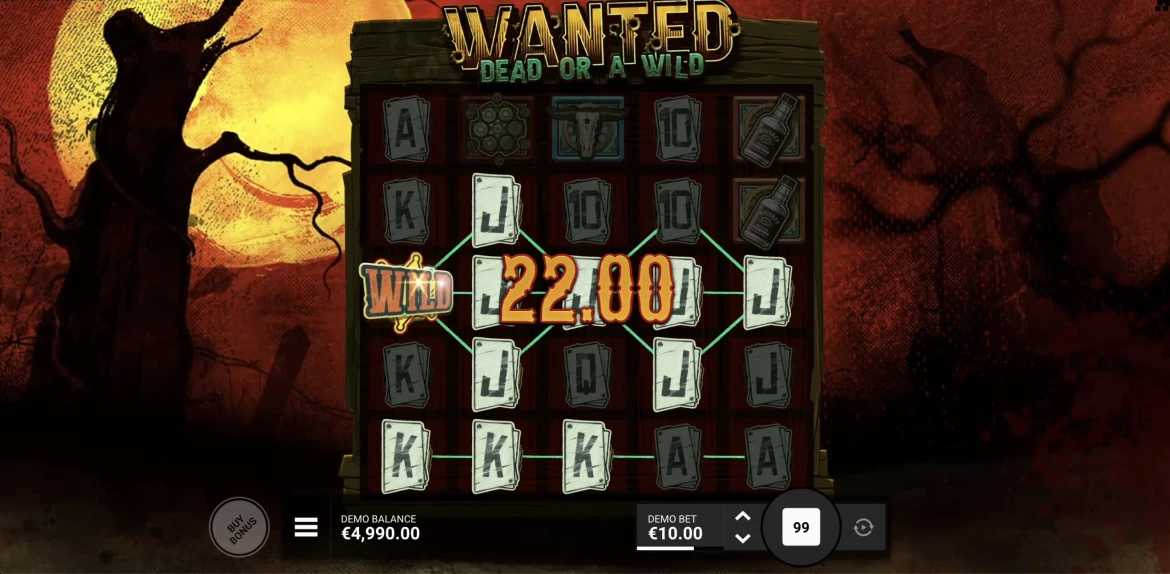
Hacksaw Gaming’s Wanted Dead or a Wild arrived in 2022 with an RTP of 96.38%, a 5-reel, 5-row, 20-payline structure, a volatility rating of 10 on Hacksaw’s own scale, and a max win of 12,500x stake. Stake range is 10p to £100 per spin. The title carries three distinct bonus rounds — Duel at Sundown with multipliers, Dead Wood with sticky wilds, and Great Train Robbery with multiplier upgrades — each triggered by three corresponding scatter symbols. Hacksaw documented bonus frequency at roughly 1 in 312 spins, which places the title firmly in the punishing band where 300-spin dry stretches are statistically routine rather than unlucky. The base game contributes very little to overall return, the bonus rounds carry the entire RTP, and players who can’t tolerate sustained losing patches without chasing should avoid the title regardless of bankroll size. We cover the broader high volatility slots tier separately for the still-demanding-but-less-extreme band immediately below this one.
Mental 2

Nolimit City released Mental 2 in 2024 with an RTP of 96.08% on the standard certification, a 5-reel, 5-row layout with 243 base ways expanding through xWays and xSplit mechanics, very high volatility on the provider’s official scale, and a published max win of 66,666x stake — among the highest ceilings currently deployed in the regulated UK market. Stake range is 20p to £25 per spin. The title carries forward the asylum theme of the original Mental and stacks four bonus modes triggered by different scatter combinations, each delivering distinct multiplier behaviour and feature persistence. Bonus frequency is intentionally rare, base-game contribution is suppressed by design, and most sessions close out without the headline figure being reachable. UK players who want the most extreme ceiling currently available among modern releases spin Mental 2 specifically — the trade-off is one of the harshest base-game rhythms in the category.
Dead or Alive 2
NetEnt’s Dead or Alive 2 launched in 2019 with an RTP of 96.82%, a 5-reel, 9-payline configuration, very high volatility on the studio’s official scale, and a published max win of 100,000x stake — extreme even by the category’s standards. Stake range runs from 9p to £9 per spin, lower than most modern releases by deliberate design. Three feature options trigger from three scatters: Train Spins with sticky wilds, High Noon Saloon with stacked wild reels, and Old Saloon with a 2x multiplier. The variance lives in the High Noon mode specifically — most pay-outs are modest, but the rare full-screen wild alignment delivers the headline figure, and that alignment is statistically rare even within bonus rounds that themselves trigger rarely. The title remains the longest-running benchmark in the category, with Dead or Alive 2 sessions in 2026 still representing the cleanest example of how extreme variance feels in practice.
Le Bandit
Hacksaw Gaming’s Le Bandit launched in August 2023 with a published RTP of 96.27%, a 5-reel, 5-row, 25-payline structure, a volatility rating of 9 out of 10 on Hacksaw’s own scale, and a max win of 25,000x stake. Stake range is 10p to £100 per spin. The title’s distinctive mechanic is the Bonus Hunt feature, where Bandit symbols collected on the reels can either trigger Free Spins immediately or be saved across spins — players choose whether to trigger early at three Bandits or wait for four or five at the cost of session time. The Free Spins round applies sticky multipliers from collected symbols, with the highest pay-outs requiring near-perfect feature timing. Hacksaw documented the bonus frequency at roughly 1 in 280 spins, which places Le Bandit firmly in the patience-defined band where most sessions close out below break-even. Players testing the title before committing real cash should run extensive demo time — we cover demo testing in detail in our free demo slots guide.
How Very High Volatility Slots Work
The maths behind very high volatility slots is built around a deliberate suppression of base-game return in favour of bonus-round contribution. Providers run millions of simulated spins during certification and tune the symbol distribution, paytable values, and bonus trigger probability to produce a specific return distribution shape — one where most individual sessions return well below the published RTP, but a small number return far above it. The headline RTP is recovered only across volume the certifier tests at, which is typically tens of millions of spins, not the hundreds or thousands a typical UK player runs over a year on one title.
Hit frequency derivation matters intensely here. A slot pays a winning combination on roughly 12% to 18% of spins in the very high variance class — meaning more than four out of every five spins return nothing. Of the spins that do pay, most return less than half the original stake, with the genuinely meaningful wins clustered exclusively in bonus rounds. Bonus frequency in this category typically sits between 1 in 250 spins and 1 in 500 spins, with documented figures from providers including Hacksaw and Nolimit City. None of this is hidden — providers publish volatility ratings and bonus-frequency figures in title information panels, and operators must publish the deployed RTP for every slot under UKGC rules in 2026.
SpinHunter’s review and refresh cycle for very high volatility slots in 2026 evaluates titles quarterly. Triggers for re-evaluation include provider RTP changes documented at recertification, displacement by new releases that hold up over engagement metrics, or any reported variance discrepancy between certified and deployed builds. Titles drifting toward standard high variance through soft maths revisions are reclassified rather than removed. We track new slots separately for releases too recent to have stable engagement data, since variance noise on small samples can mislead even the providers themselves.
Key Characteristics of Very High Volatility Slots
UK players spinning very high volatility slots in 2026 should expect a few consistent traits. Hit frequency runs from 12% to 18% on titles in this category, base-game wins below stake are the overwhelming norm rather than the exception, and the bonus round typically contributes 45% to 60% of total return — meaning the base game alone typically returns at 50% to 55% RTP without bonus triggers. Max wins range from 12,500x stake on the conservative end of the category up to 150,000x on the most extreme releases, with stake ranges typically running from 10p or 20p at the floor to £25 or £100 at the ceiling, depending on how the studio constrains upper-end exposure on its most volatile titles.
Bonus frequency is the defining characteristic that separates this band from standard high variance. Most very high volatility slots trigger a bonus round between 1 in 250 and 1 in 500 spins, compared to 1 in 150 to 1 in 350 on the high variance tier directly below. The difference looks small in print but is dramatic in practice — at £1 stakes, a 1-in-500 bonus frequency means an expected wait of around £500 of stake between triggers, with normal variance putting the actual wait anywhere from 50 spins to 1,500 spins on either side of that average. Players entering the category without internalising that figure tend to misread normal variance as bad luck and chase accordingly.
Device compatibility is universal in 2026. Every very high variance title from a serious provider runs in HTML5, loads in any modern browser without a plugin, and supports both landscape and portrait orientations on phones. The visual complexity of modern Hacksaw and Nolimit City releases can stress mid-range mobile hardware on older Android devices, with Mental 2 and San Quentin xWays loading heavier asset packages than older titles in the category — but performance issues are rare on hardware released within the last three years. Session length implications are extreme: a £100 bankroll spun at £1 per round on a very high variance title can collapse in 20 minutes without a bonus trigger or stretch past three hours on a productive trigger sequence.
Common Misconceptions About Very High Volatility Slots
The first misconception about very high volatility slots is that they’re “rigged” because so many sessions close out at substantial losses without a single bonus trigger landing. They aren’t, and they can’t be under UKGC oversight in 2026. The published bonus frequency figures — 1 in 312 spins on Wanted Dead or a Wild, 1 in 280 spins on Le Bandit — are accurate descriptions of long-run averages, but the variance band around those averages is enormous. A 200-spin session without a bonus trigger on a 1-in-300-frequency title is genuinely normal rather than unusual; it’s exactly the experience the maths predicts. Players experiencing what feels like statistical impossibility are typically encountering the second standard deviation of an honest distribution, not deception.
The second is that the cost per bonus is recoverable through patience alone. The published bonus frequency tells you the expected interval between triggers, but it tells you nothing about whether the bonus that eventually lands will be productive. A 1-in-300 bonus on a title with a 12,500x max win can land and pay 5x stake, leaving you well below break-even on the cost of triggering it. Bonus contribution to RTP is an aggregate figure across millions of bonus rounds, not a per-round guarantee. Players who frame the wait as an investment that’s “owed” a productive payout misread the maths — every bonus round is independent, and the distribution of bonus outcomes is itself wide.
The third is that very high variance titles are universally bad value compared to standard 96% RTP slots. They aren’t structurally bad value at the long-run RTP level — Mental 2 at 96.08% and Le Bandit at 96.27% return roughly the same long-run percentage as a standard market 96% slot. What changes is the shape of the return distribution: the worse the variance band, the more skewed the outcomes toward the rare large wins. Players approaching the category for entertainment value tied to ceiling exposure are using it appropriately; players approaching it expecting better expected value than standard slots are misreading what variance actually does. We cover the comparable highest RTP slots tier separately for players prioritising long-run return optimisation.
How to Choose the Right Very High Volatility Slots for You
The low-budget casual UK player — bankrolls under £50 a week, sessions of 15 to 30 minutes — should not play this category as their primary rotation. The maths is structurally hostile to short bankrolls because the bonus frequency is too rare for typical session lengths to deliver the bonus that carries the title’s return profile. If very high variance is genuinely what you want as occasional entertainment, stake at 10p per spin on a £20 weekly slot budget across the conservative end of the category — Wanted Dead or a Wild at 12,500x cap, or Le Bandit at 25,000x — and accept that most sessions will close out without a bonus trigger. The honest framing is paying for the rare upside, not for sustainable session entertainment.
The mid-stakes regular — sessions of 45 to 90 minutes, weekly bankrolls in the £100 to £400 range, comfortable with £1 to £5 stakes — is the natural audience for the band when used selectively rather than as a primary rotation. A £200 bankroll spun at £1 per round delivers 200 spins, which is enough volume for a reasonable but not high probability of a bonus trigger landing. Wanted Dead or a Wild and Le Bandit sit comfortably in this profile. Mid-stakes regulars who play very high variance frequently typically combine it with high-RTP standard rotations to balance the long-run return profile, since exclusive play in this band amplifies variance to levels most bankrolls can’t sustainably absorb.
The high-roller bankroll player — sessions over two hours, weekly bankrolls of £1,000 plus, stakes from £5 to £100 per spin — is the one profile where the maths works structurally. At £10 per spin on a 1-in-300 bonus frequency title, a session of 300 spins costs £3,000 in stake to trigger one expected bonus. That figure is sustainable for the high-roller profile but catastrophic for any other tier. San Quentin xWays at 150,000x and Mental 2 at 66,666x are designed for this profile specifically — the ceiling exposure justifies the stake-volume cost. Strategy at this level is fixed-stake discipline with a hard loss cap at 25% of session bankroll rather than the 30% to 50% used elsewhere, because variance can erode bankrolls faster than typical loss limits anticipate.
Tips and Strategy for Playing Very High Volatility Slots
The first useful principle is bankroll-relative bet sizing calibrated to the bonus frequency rather than to standard slot maths. The rule of thumb in this category is to size each spin at no more than 0.25% to 0.5% of session bankroll — meaning a £100 bankroll spins at £0.25 to £0.50 per round, not £1 or higher. The bonus frequency of 1 in 250 to 1 in 500 spins requires sustained volume to give the bonus a reasonable chance of landing within the session, and stake sizes that produce fewer than 200 spins per session structurally guarantee most sessions will close before any meaningful event. This is the single most common mistake in the category, and the maths makes it predictable.
The second is the case for substantial demo-first play before committing real cash. Spin 500 to 1,000 demo rounds on any very high variance title before depositing — the volume is required to get a representative slice of the title’s actual rhythm, since shorter samples consistently under-represent how punishing the dry stretches are. Players who get bored, frustrated, or compulsive in demo mode will get worse on real money, not better. Demo testing is also the only practical way to confirm whether the bonus mechanic delivers what the marketing implies, since the underlying maths is identical to the cash version under UKGC certification. We cover demo testing strategy in detail elsewhere on the site.
The third is session limit discipline calibrated tighter than any other slot category. Set a real-money bankroll before the session, set a hard loss cap at 25% of that bankroll, and walk away when the cap fires regardless of how close to a bonus trigger you feel. UKGC operators in 2026 are required to display loss alerts during play and to provide deposit limits, time-outs, and reality checks in account settings before you spin a single round. There are no patterns, no hot or cold periods, and no system that improves on basic stake-and-stop discipline. The bonus frequency is what it is; chasing past the cap costs measurable bankroll without changing the trigger probability of the next spin.
Leading Providers for Very High Volatility Slots in 2026
Hacksaw Gaming has consolidated its position as the modern modern-mechanic studio of choice for the category through Wanted Dead or a Wild, Le Bandit, Hand of Anubis, and the Cash Compass family — all of which carry 9 or 10 ratings on the studio’s official volatility scale and document bonus frequencies that genuinely punish casual play. Hacksaw’s release pace through 2024 and 2025 has been aggressive, with new very high variance titles shipping every six to eight weeks at UKGC operators. Nolimit City delivers the ceiling-defining flagship releases through Mental 2, San Quentin xWays, Tombstone RIP, and the broader xWays mechanic library, where max win figures climb past 100,000x stake and base-game contribution is suppressed below 50% of total RTP.
NetEnt maintains its presence in the category through Dead or Alive 2 as the longest-standing benchmark, with the studio’s broader output trending away from the most extreme variance band over the past five years. Push Gaming holds a position through Razor Returns and Razor Ways, both follow-ups to Razor Shark that push the original’s high variance into the very high band through deeper multiplier stacks. Big Time Gaming sits at the upper end of the category through select Megaways releases like White Rabbit Megaways, where the dynamic reel structure produces variance distributions that match or exceed traditional very high variance configurations. Yggdrasil contributes occasional entries through the Valley of the Gods family, though the studio’s main output sits comfortably in standard high variance rather than the more extreme band. The category is dominated by Hacksaw and Nolimit City in 2026, with most other studios releasing only occasional titles that reach the variance threshold rather than treating the band as a primary production focus.
Very High Volatility Slots vs Related Slot Types
The category sits at the extreme end of the variance spectrum, with the high variance band immediately below it and no higher band above. Direct comparison with adjacent volatility tiers makes the trade-offs explicit. The axes that matter for that comparison are the volatility rating, the typical hit frequency, the bonus frequency, and the player profile that suits each tier. The table below summarises those four axes side by side.
| Slot Tier | Volatility Rating | Hit Frequency | Bonus Frequency | Player Profile |
|---|---|---|---|---|
| Medium volatility | 5–6 / 10 | 20%–28% | 1 in 100–200 | Default mass market |
| High volatility | 7–9 / 10 | 15%–22% | 1 in 150–350 | Variance-tolerant regulars |
| Very high volatility | 9–10 / 10 | 12%–18% | 1 in 250–500 | Extreme-ceiling specialists |
| Standard slots overall | 4–7 / 10 | 22%–30% | 1 in 80–200 | Broadest UK audience |
The table makes the trade explicit: this category requires roughly twice the spin volume per bonus trigger compared to medium variance, and the gap between dry-streak duration in this band versus high variance is meaningful in practice rather than just on paper. The session profile is patience-defined to a degree that the high variance tier doesn’t quite reach — players who sit comfortably in standard high variance often find they hit a tolerance ceiling when they cross into very high variance, which is the typical signal that the band sits beyond their match. UK players evaluating where they fit should consider popular slots as a contrast for the broader-engagement tier where the maths is structurally less hostile.
Where to Play Very High Volatility Slots at UK Casinos
Before you deposit, verify the operator. Every UK-facing casino must hold a current UK Gambling Commission licence — that’s verifiable on the UKGC public register, where the licence number printed in the casino’s footer must match an active record. The casino’s help panel should also publish RTP for every slot it deploys, since some operators run multiple RTP versions of the same title under separate certification — the 96.38% Wanted Dead or a Wild and lower-RTP variants are both legal builds, and only the operator’s published figure tells you which one sits on their server. Verification matters more in this category than in lower-variance categories because the bonus frequency makes any RTP gap more punishing across realistic session lengths.
The April 2026 UKGC rule set then applies once you cross from demo into real money. Bonus wagering caps at 10x the bonus value, the maximum bet during any bonus play is £5 per spin or hand regardless of the cash stake limit on the title, mandatory loss alerts must display when net loss thresholds are reached during a session, and the 2021 bonus-buy ban remains in force on every UKGC-licensed slot — meaning no title legally available to UK players can offer a feature-buy button, regardless of what the demo on the provider’s site might show. The bonus-buy rule affects this category more than any other because the buy is often the only practical way to access the bonus round on a short session, and UK players cannot legally use that mechanic on UKGC slots.
Responsible Gambling
UKGC operators in 2026 are required to provide a full set of in-account responsibility tools to every UK player. Deposit limits can be set daily, weekly, or monthly and apply across the operator’s network within their licence. Reality checks display elapsed session time and net profit or loss at intervals you control. Time-outs lock the account from 24 hours up to 6 weeks. Self-exclusion at the operator level prevents account access for a fixed term you choose. These tools are configurable before you make your first cash deposit and remain accessible throughout your relationship with the operator.
External support exists when operator-level tools aren’t enough. GamStop is the UK’s national self-exclusion scheme, blocking access to every UKGC-licensed gambling site for a chosen period of six months, one year, or five years across the entire network. GamCare provides counselling and a live helpline on 0808 8020 133 with seven-day support, reaching trained advisers for confidential discussions. BeGambleAware operates the awareness side, providing information, treatment referrals, and self-assessment tools for anyone wanting to evaluate their own gambling behaviour without yet committing to support. 18+ Please gamble responsibly.
Frequently Asked Questions
* 18+ only. New customers only. T&Cs apply. Gamble responsibly.